The three Living Labs are established in the municipalities of Lemvig, Silkeborg and Næstved. The selection of these municipalities is strategic, as they represent different landscape, environmental and agricultural challenges, offering the opportunity to test solutions in very different contexts. The three municipalities serve as starting points for collaboration with the local tripartite partnerships in which they are engaged.
Lemvig Municipality features a highly varied geology and a coastal environment with sensitive marine recipients. The municipality is characterised by extensive agricultural and natural areas closely connected to the Limfjord and Nissum Fjord. Here, there is a particular need to manage nutrient leaching to the aquatic environment, while agricultural production must evolve in a more sustainable direction.
Silkeborg Municipality and the Gudenå River catchment, within the local Randers Fjord tripartite partnership,
represent an area with great potential for nature restoration and biodiversity. The area is shaped by lakes, streams and forests, providing opportunities to develop multifunctional landscapes where water quality, biodiversity and recreational values can be combined with farming. Silkeborg also hosts the secretariat for the Gudenå Committee, enabling unique cooperation across eight municipalities.
Næstved Municipality is characterised by some of Denmark’s most fertile agricultural land, but also by landscapes with vulnerable recipients. The challenge here is to balance intensive farming with the need to reduce nutrient emissions and enhance nature values. The municipality therefore represents the complex trade-offs between high production value and environmental considerations. Næstved also serves as the secretariat for three local tripartite partnerships that will take part in the project.
Together, the three municipalities provide a strong framework for Living Labs, where TRANSFORM can develop and test solutions that are both locally rooted and scalable for national strategies.

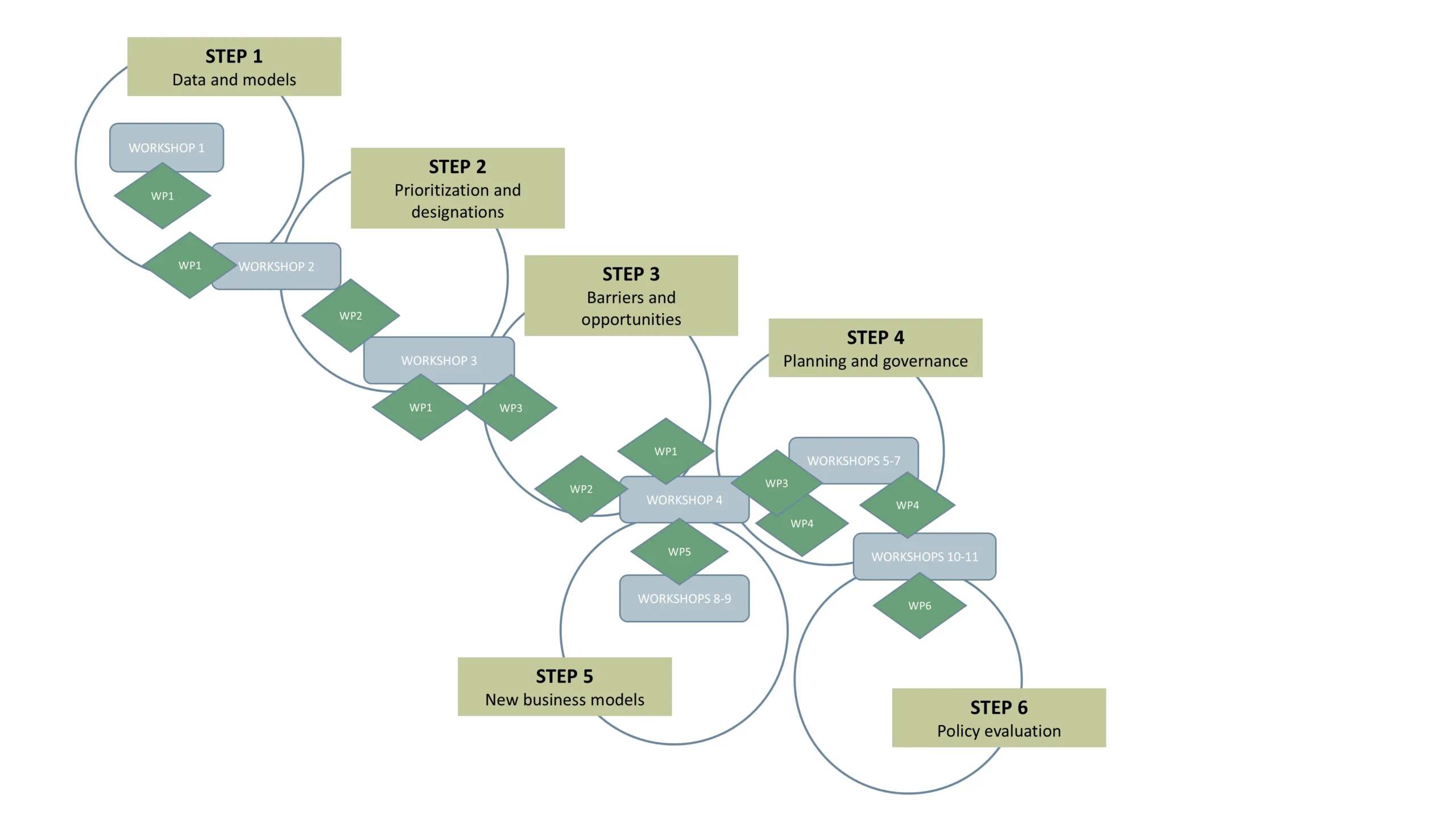
A central part of TRANSFORM is the way knowledge and solutions are developed in close dialogue between researchers and local stakeholders. This takes place through a workshop-based process, where municipalities, land-owners, farm associations, civil society organizations and researchers participate together in a joint development process.
The workshop structure is organised in several steps, following the logic of the Green Tripartite Agreement’s requirements for local transformation plans:
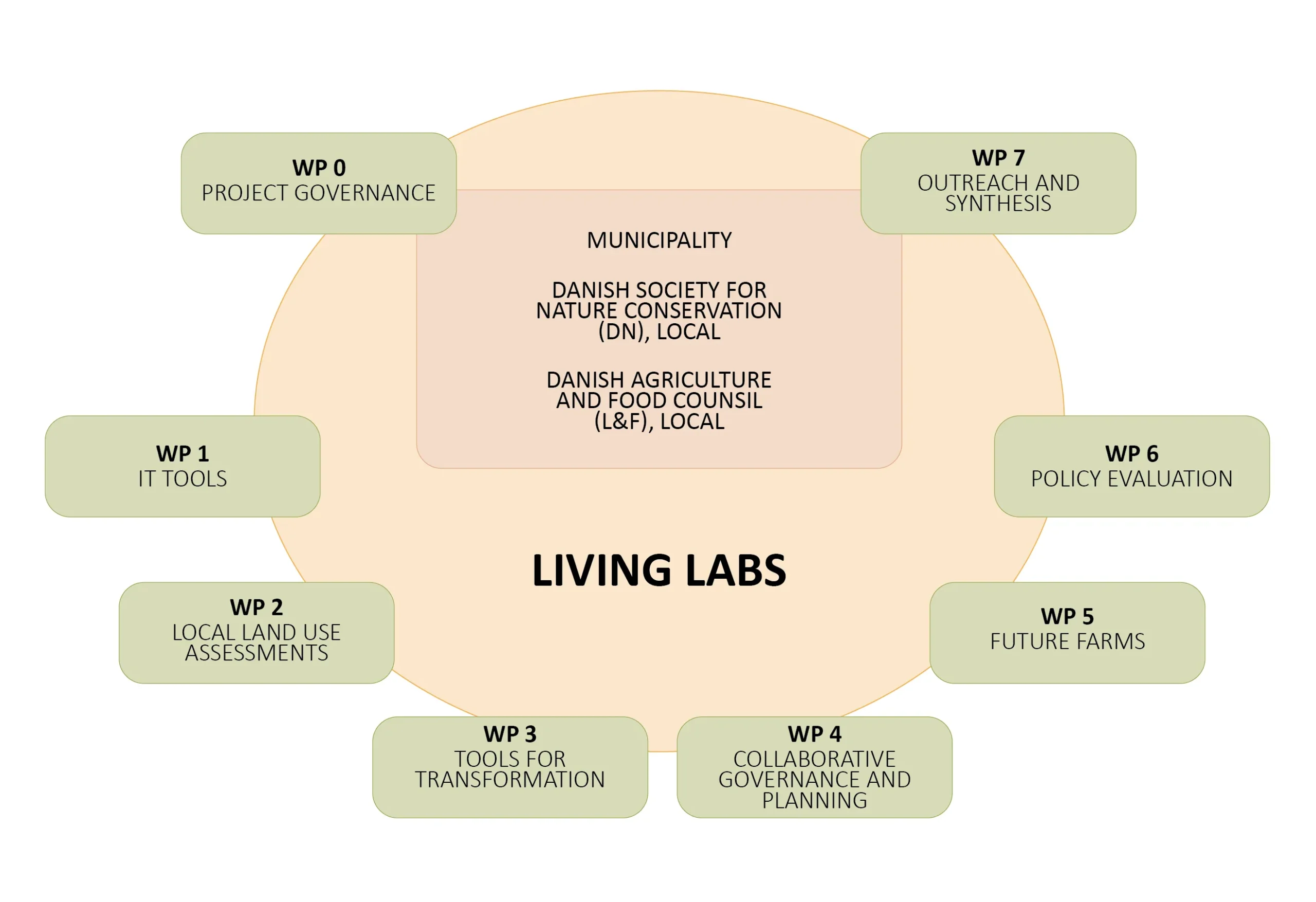
Stakeholder involvement is a basic element in TRANSFORM. The project is built around a co-creation approach where researchers, authorities, agriculture, businesses and civil society develop solutions together.
The governance structure of the project is designed to balance interdisciplinary research with practical implementation: